

In stock
In stock
Stunning Statue
Studio Collection – Veronese Design
Details are magnificent
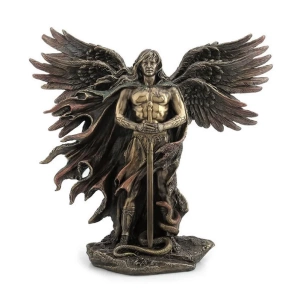
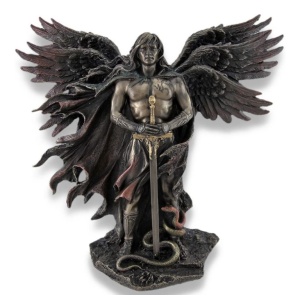
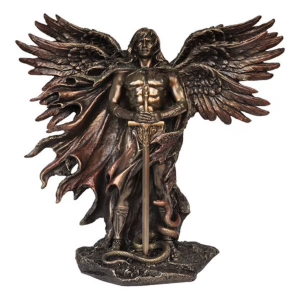
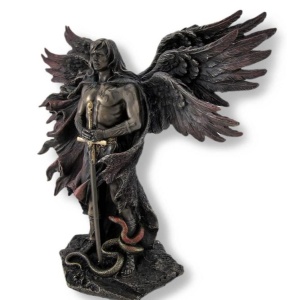
In the Bible, the term “Seraphim” refers to a type of celestial being or heavenly creature that is described specifically in Isaiah 6. This passage is a vision that the prophet Isaiah had of the throne room of God, and it provides a glimpse into the heavenly realm:
“1 In the year that King Uzziah died, I saw the Lord, high and exalted, seated on a throne; and the train of his robe filled the temple. 2 Above him were seraphim, each with six wings: With two wings they covered their faces, with two they covered their feet, and with two they were flying. 3 And they were calling to one another: ‘Holy, holy, holy is the Lord Almighty; the whole earth is full of his glory.'” (Isaiah 6:1-3)
The prophet Isaiah tells us that the seraphim are six-winged “fiery” angels, or heavenly beings, who surround God as He sits upon His exalted throne and who worship God continually (Isaiah 6). The seraphim also minister to the Lord and serve as His agents of purification, as demonstrated by their cleansing of Isaiah’s sins before he began his prophetic ministry. One placed a hot coal against Isaiah’s lips, saying, “See, this has touched your lips; your guilt is taken away and your sin atoned for” (Isaiah 6:7).
This description shows that Seraphim have six wings (three pairs), and their primary role is to praise and worship God. They are known for proclaiming God’s holiness with the repeated cry of “Holy, holy, holy is the Lord Almighty.” The imagery of the Seraphim in Isaiah’s vision emphasizes God’s transcendence and majesty.
Part of the angelic hierarchy, Seraphim are not as frequently mentioned in the Bible as other angelic beings, such as cherubim or archangels. Their role is primarily associated with worship and exaltation of God. The term “Seraphim” comes from the Hebrew word “seraph,” which means “burning ones” or “fiery ones,” possibly suggesting a radiant or intense nature.
Isaiah chapter 6 is the only passage in the Bible that specifically mentions the word “seraphim,” meaning “the fiery ones.” Isaiah describes his intense vision of God’s heavenly court in that Biblical chapter. Namely, the prophet saw God seated on an exalted throne surrounded by flying angels called the “seraphim” (Isaiah 6:1-2).
The word “seraphim” is the plural form of the Hebrew root word “saraph,” which means “to burn.” The implication here is that these attendant angels burn with love for God. The seraphim seem to resemble humans, as Isaiah describes them as having faces, feet, hands, and voices (Isaiah 6:2-7).
The seraphim repeatedly proclaim God’s supreme holiness and glory in Isaiah’s vision. (Isaiah 6:3). The seraphim do not address God directly but call out to each other in God’s presence: “And they were calling to one another: ‘Holy, holy, holy is the LORD Almighty; the whole earth is full of his glory.’” (Isaiah 6:3).
To be “holy” means being set apart and considered sacred. This thrice invocation of the word “holy” to describe God’s sacred nature appears only two times in the Bible, and angels speak both times to someone transported in a vision to the throne of God.
(The other passage containing this thrice invocation of God’s holiness is found in Revelation 4:8, which also refers to six-winged angels surrounding God’s heavenly throne and constantly declaring God’s glory.)
The fact that the seraphim in Isaiah’s vision use a three-fold repetition of God’s holiness—called the trihagion—is significant. In ancient Judaism, the number “three” signified completeness and stability, here connoting God’s wholeness as the beginning, the middle, and the end. Announcing God’s holiness three times also connotes:
Isaiah goes on to describe the effect of the seraphim’s proclamation, telling us that at the sound of the angel’s voices asserting God’s magnificence, “the doorposts and thresholds shook, and the temple was filled with smoke” (Isaiah 6:4). In Biblical times, earthquakes and smoke were signs of God’s divine presence. (Exodus 19:18; Psalm 104:32).
Each seraph is described as having six wings: two wings used to cover their face, two used to cover their feet, and the remaining two used to fly.
Two Wings to Cover Their Faces
The seraphim may use four of their six wings to cover themselves to express their humility before God. In particular, these burning angels may use a pair of wings to cover their faces to show God reverence, considering themselves unworthy to look upon the face of God and also in obedience to the Lord’s admonition that no one may see His face and live (Exodus 33:20).
Two Wings to Cover Their Feet
The fact that the seraphim also use a second pair of wings to cover their feet may further display reverence for God in that the angels may be refusing to reveal any unclean aspects of their being before the Lord.
Two Wings to Fly

Fresco of the Seraphim in Hagia Sophia by Christophe Meneboeuf

Seraphim – Jean de Berry
About this item
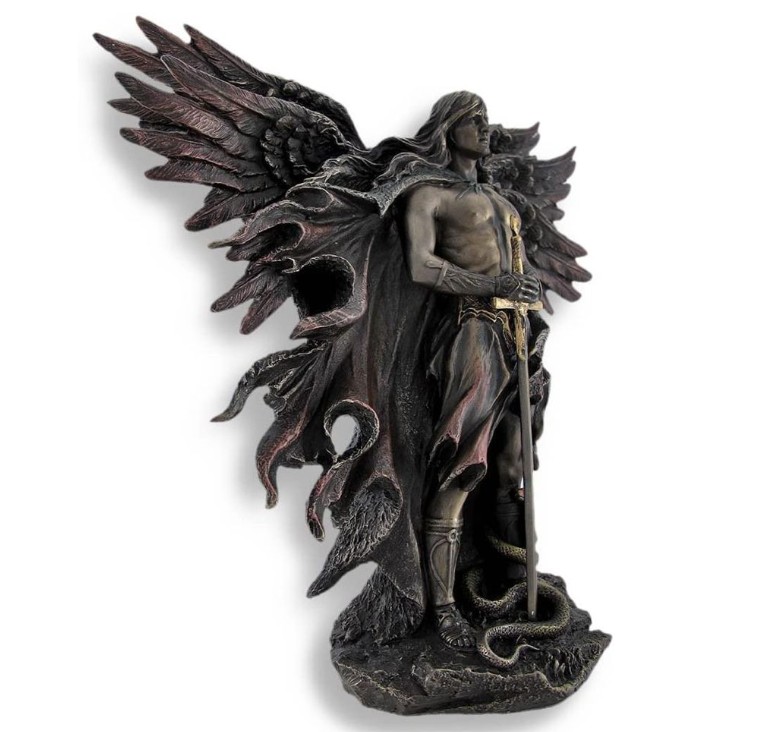
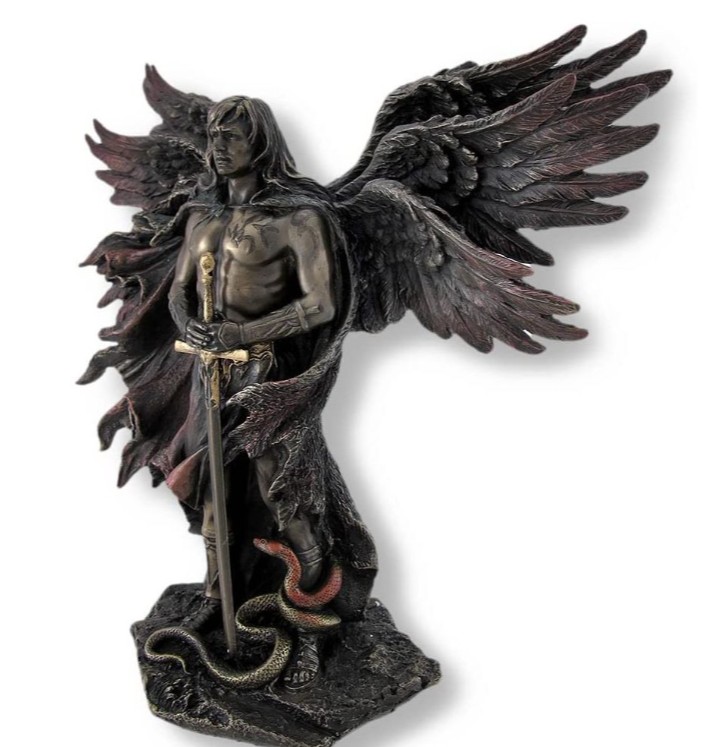
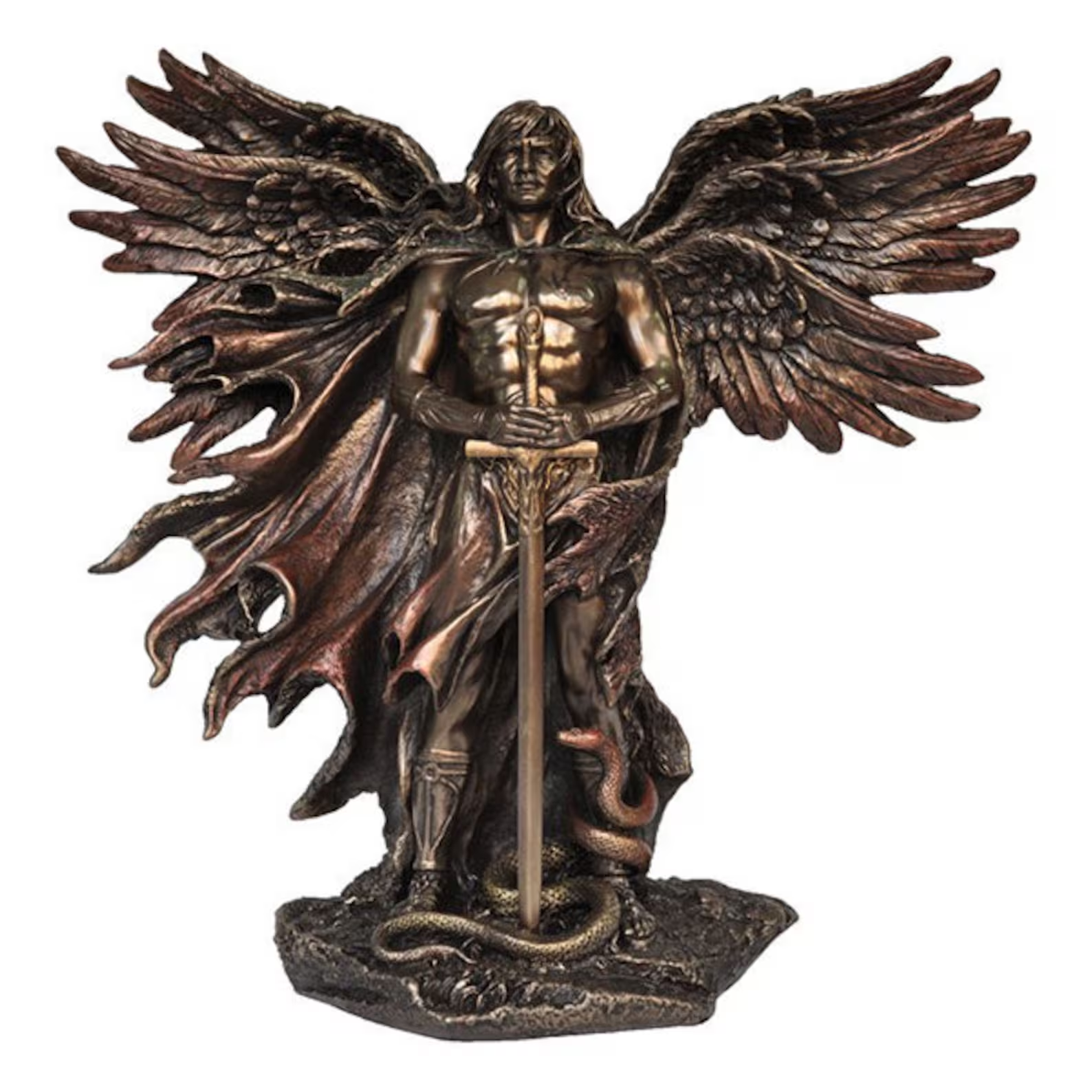
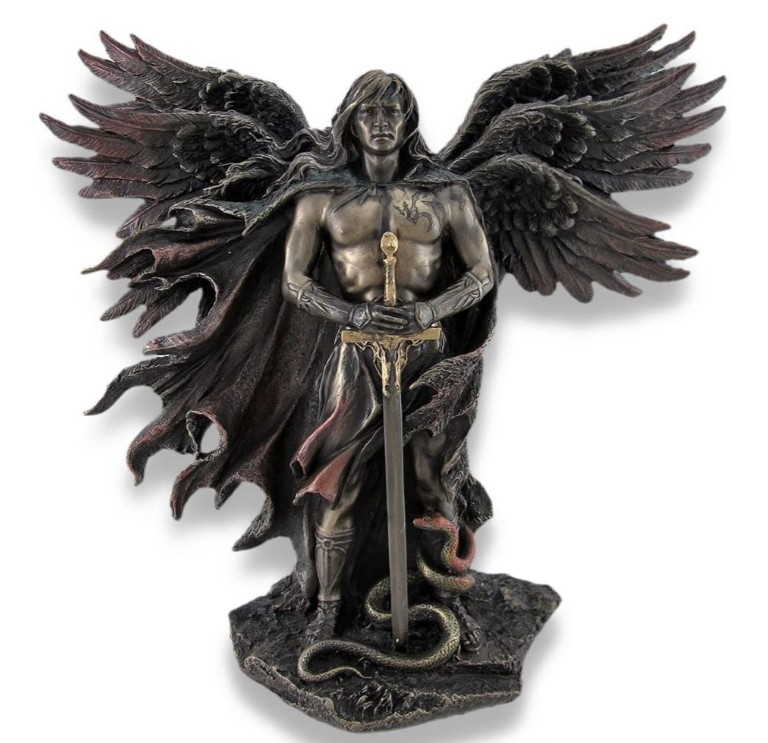
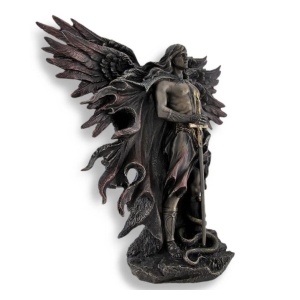
Introducing our extraordinary Six-Winged Guardian Angel statue, a magnificent representation of celestial protection and divine guidance. This breathtaking piece showcases the awe-inspiring presence of a celestial being with six majestic wings.
Standing at a height of 26cm, our Guardian Angel statue is meticulously crafted with intricate attention to detail. Each of the six wings is intricately sculpted, emanating a sense of ethereal beauty and strength. The angel’s serene countenance reflects compassion, love, and watchful care.
Made from high-quality polyresin, this statue is skilfully coated with a captivating bronze finish, adding a touch of timeless elegance. The durable material ensures longevity, allowing you to enjoy the presence of this celestial guardian for years to come.
Whether displayed in a sacred space, meditation corner, or as a cherished centrepiece, our Six-Winged Guardian Angel statue serves as a constant reminder of divine protection and guidance. Its presence brings a sense of comfort and peace, fostering a connection to the higher realms.
Embrace the celestial realms and invite the profound energy of the guardian angel into your space. Order now and experience the celestial beauty and divine guidance embodied by this extraordinary statue.
✧ Material: Cold Cast Bronze Coated Polyresin
✧ Measurements: 26cm(H) x 28cm(W) x 12cm(D)
✧ Hand painted
✧ Intricate detail
~~~~~~~~~~~~~~~~~~~~~~~~~~~~~~~~~~
What is Cold Cast Coated Polyresin?
Cold Cast Coated Polyresin is a modern method of casting sculptures and statues by using a resin mixed with real powdered bronze as the casting material. The finished product has a look that is similar to traditional bronze, though it tends to be lighter. This method is often preferred to achieve a higher quality of detail and finish.
| Weight | 1 kg |
|---|---|
| Dimensions | 40 × 35 × 20 cm |
You must be logged in to post a review.


Reviews
There are no reviews yet.